Get Quote
Concrete NDT· Compressive Strength MPa · Tasmania

Compressive Strength MPa
Testing Tasmania

Silver Schmidt hammer rebound testing for MPa to AS/ASTM standards — rapid, non-destructive in-situ strength estimation.

MPa
Strength Units
C805 / D5873
Standards
In-situ
No Coring

Schmidt Hammer Testing Tasmania:
Concrete Strength

The Schmidt hammer evaluates the rebound of a spring-loaded mass that strikes the concrete surface. Delivering an impact with a specific energy level, the rebound distance varies based on the concrete's surface hardness, which directly correlates with the compressive strength of the concrete. This allows our field technicians to provide fast, reliable assessments on-site without invasive drilling or damage.

Using precise calibration and conversion charts, our geophysics team translates the rebound measurements into highly accurate estimates of compressive strength expressed in kPa or MPa. To ensure compliance for civil engineering and infrastructure projects, all of our Schmidt hammer testing protocols, data analysis, and structural reporting strictly align with ASTM C805-02 and ASTM D5873 industry standards.

This non-destructive testing approach is well-suited for evaluating the on-site uniformity of concrete, identifying structural areas of substandard quality or degradation, and approximating the progression of in-situ strength over time. Spaulding Geophysics delivers this expert concrete testing for commercial developments, bridge assessments, and civil construction assets spanning Hobart, Launceston, Devonport, Burnie, and across Tasmania.

How It Works
1
Spring-loaded mass impact
Hammer plunger is pressed against the prepared concrete surface, compressing an internal spring
2
Rebound distance measured
When released, the mass strikes the surface; the rebound distance R is recorded by the device (scale 10–100)
3
Conversion to strength
The rebound number R is converted to MPa via the manufacturer calibration chart, corrected for impact direction and angle
4
Statistical analysis
Minimum 10 readings per test location; outliers removed; mean and standard deviation reported per zone

When Strength
Testing is Required

Strength measurements are needed for a range of purposes — from quick quality verification on fresh pours to evaluating the residual capacity of aging infrastructure before reuse or sale.
  • QA/QC quality verification on new pours and construction works
  • Evaluating hardness and conformance of new concrete placements
  • Assessing structural conditions and residual strength in aging structures
  • Accommodating changes in slab loading or functional repurposing
  • Initial evaluation of in-situ strength prior to coring or load testing
  • Structural auditing and service life assessments
  • Pre-purchase structural evaluations and due diligence
  • Pre-insurance assessments for insurers, banks and guarantors
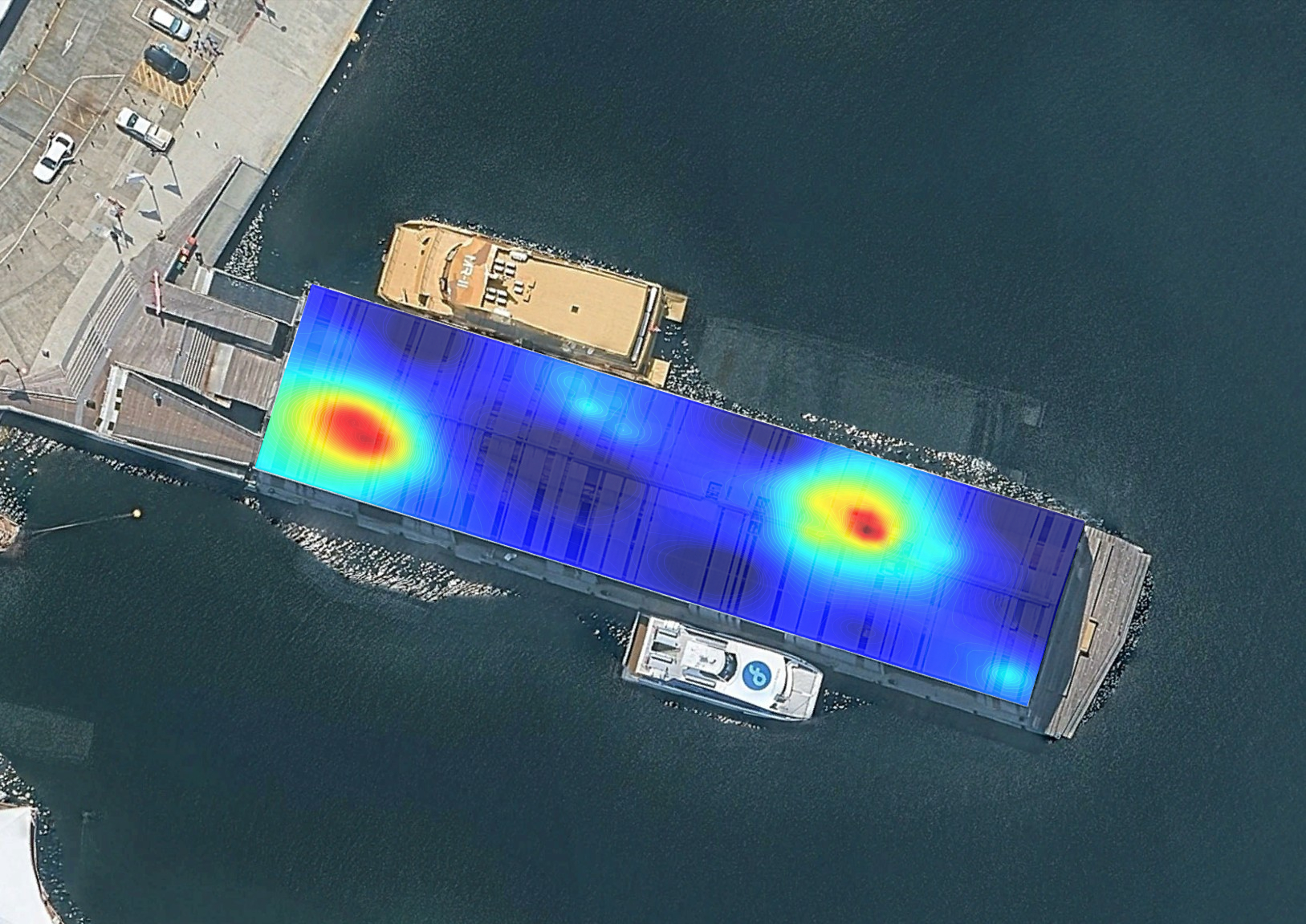
Wharf Deck Slab Compressive Strength MPa Contour Map Tasmania

Wharf Deck Compressive Strength (MPa) Contour Map with warm colors indicating zones of lower strength

Strength
Distribution Maps

Test results are spatially organised by structural element and zone, producing strength distribution maps that immediately identify conforming and non-conforming areas — enabling targeted intervention rather than blanket remediation.

Typical Report Contents
DeliverableDetail
Rebound data tableRaw R values, corrected readings, and MPa estimates per test point
Strength mapColour-graded plan showing strength distribution across the structure
Zone statisticsMean, standard deviation and characteristic strength per test zone
Standards complianceComparison against specified design strength or acceptance criteria
RecommendationsZones requiring further investigation, coring, or remediation
ASTM C805-02
Standard test method for rebound number of hardened concrete
ASTM D5873
Rock hardness by rebound hammer — dynamic elastic properties and penetration resistance
Visual Inspection GPR Structural Imaging Corrosion Testing Pile Integrity Testing Request Testing

Areas We
Serve in Tasmania

Spaulding Geophysics provides compressive strength testing and concrete NDT services across Tasmania, from Hobart and Launceston to regional centres, coastal towns, and remote communities statewide.

South & Greater Hobart
  • Hobart
  • Kingston
  • Margate
  • Kettering
  • Bruny Island
  • New Norfolk
  • Sorell
  • Dodges Ferry
North & Launceston
  • Launceston
  • George Town
  • Longford
  • Perth
  • Hadspen
  • Westbury
  • Deloraine
  • Bridport
Northwest Coast
  • Devonport
  • Burnie
  • Ulverstone
  • Wynyard
  • Penguin
  • Smithton
  • Latrobe
  • Port Sorell
East Coast & Midlands
  • Bicheno
  • St Helens
  • Scottsdale
  • Swansea
  • Campbell Town
  • Ross
  • Queenstown
  • Huonville

Spaulding Geophysics delivers on-site compressive strength testing (MPa) across all of Tasmania — including Hobart, Launceston, Devonport, Burnie, Ulverstone, George Town, Longford, Deloraine, Smithton, Wynyard, Bicheno, St Helens, Scottsdale, Queenstown, Huonville, Kingston, Kettering, Bruny Island and surrounding communities. Remote and regional sites welcomed.